The line between searching and buying just got a lot blurrier. On Sunday, January 11, Google announced a massive update to its AI shopping capabilities, effectively transforming its search engine from a place to find links into a place to complete transactions.
For digital marketers and everyday users alike, this is a pivotal shift. Here is the breakdown of what Google introduced and why it matters.
The Headline: “Direct Offers” in AI Mode
The biggest news is the introduction of Direct Offers. This is a new ad format designed specifically for Google’s “AI Mode” in Search.
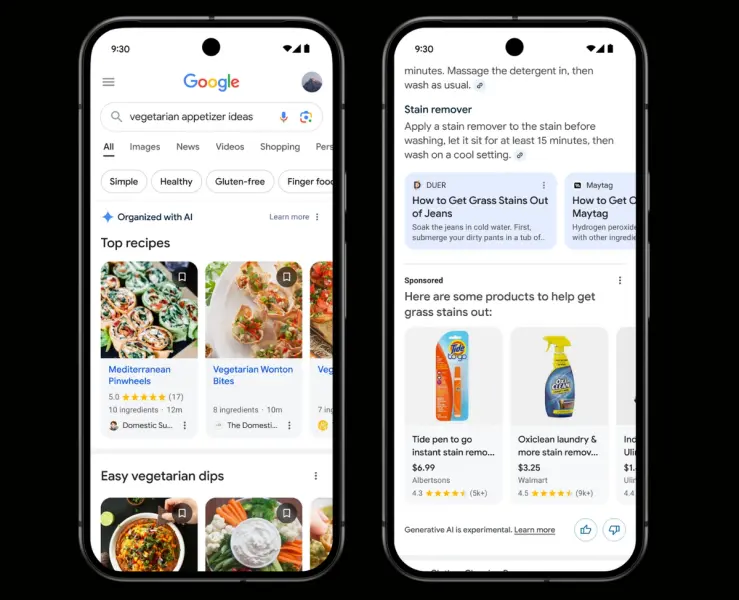
Instead of the traditional list of blue links or standard shopping carousels, Google’s AI will now analyze a user’s conversational queries to detect high purchasing intent. When it spots that you are ready to buy, it can surface exclusive, personalized discounts—such as a “20% off” code—directly within the AI-generated response.
How it works:
-
Contextual Triggering: If you search for something specific like “I need a durable, easy-to-clean rug for a dining room with kids,” the AI understands the context.
-
Seamless Display: Alongside the product recommendations, you might see a “Sponsored Deal” from a retailer (like Wayfair or Target) offering a discount code right there in the chat.
-
The Goal: To capture the sale immediately, preventing the user from clicking away to look for better prices elsewhere.
Beyond Ads: The “Agentic” Shopping Era
Google isn’t just serving ads; it’s trying to own the checkout process. Alongside personalized ads, they introduced the Universal Commerce Protocol (UCP).
This open standard allows AI “agents” to handle the complex steps of shopping for you.
-
Direct Checkout: You can now buy products from eligible retailers (starting with US giants like Walmart and Shopify merchants) without leaving Google Search or the Gemini app.
-
Unified Payment: It uses your saved Google Pay credentials (with PayPal coming soon) to handle the transaction instantly.
What This Means for Publishers and SEOs
For those in the digital marketing space, this update signals a transition from Search Engine Optimization (SEO) to Answer Engine Optimization (AEO).
-
Zero-Click Threats Increase: With Direct Offers and Direct Checkout, users have fewer reasons to click through to a retailer’s website or an affiliate blog. The transaction happens on Google’s turf.
-
Intent is King: Keywords still matter, but “intent signals” matter more. Advertisers will need to structure their campaigns to target conversational problem-solving queries rather than just product names.
-
Data Quality: Google introduced new attributes in the Merchant Center, allowing sellers to provide data on things like “compatible accessories” or “common product questions.” This structured data is what the AI needs to recommend your product over a competitor’s.
Privacy and Availability
With great personalization comes great data responsibility. To serve these hyper-specific “Direct Offers,” Google’s AI must analyze the nuances of your conversation in real-time, raising valid privacy concerns.
Google has emphasized that advertisers do not see your actual chat history or queries. Instead, they bid on “intent signals” that the AI detects locally. Additionally, the feature is launching first on mobile devices in the US and UK, with broader global expansion—including desktop support—scheduled for late 2026. This phased rollout suggests Google is carefully testing user sentiment to ensure the new ads feel helpful rather than intrusive.
The Bottom Line
Google is racing against OpenAI and Amazon to become the ultimate “AI Agent” that doesn’t just answer questions, but “does things” for you. For shoppers, this means more convenience and better deals. For marketers, it means adapting to a world where the funnel—from discovery to purchase—happens entirely inside a chatbot.