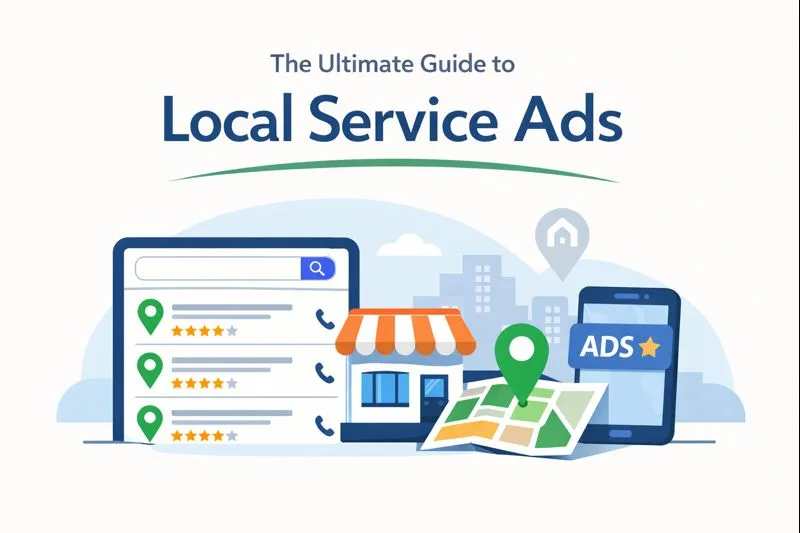

Imagine a potential customer searches for “emergency plumber” or “divorce lawyer” on their phone. They don’t scroll down to the articles. They don’t even look at the map immediately. What they see first, at the absolute top of the screen, are three small boxes with photos, star ratings, and a little green checkmark.
These are Local Service Ads (LSAs), and they are arguably the most powerful tool for service-based businesses in 2026. unlike traditional SEO which takes months, or standard Google Ads where you pay every time a curious user clicks a link, LSAs operate on a completely different model. They are built for one thing: generating immediate phone calls from high-intent customers. If you are a local service provider and you aren’t using them, you are handing the prime real estate of the internet to your competitors.
LSA vs. Traditional PPC: The Critical Difference
Many business owners confuse Local Service Ads with standard Google Ads (Pay-Per-Click). The distinction is vital for your budget.
Google Ads (PPC): You bid on keywords. You pay when someone clicks your link and visits your website. Whether they call you or immediately leave the site, you still pay.
Local Service Ads (LSA): You do not bid on keywords. You select your job types. Most importantly, you pay per lead. You are only charged if the customer calls you, sends a message, or books a service.
This “pay-per-lead” model drastically reduces the financial risk for small businesses. You aren’t paying for window shoppers; you are paying for connections.
The Power of the Badge
The visual dominance of LSAs comes from the “trust badge” Google assigns to verified businesses.
-
Google Guaranteed (Green Checkmark): Primarily for home services (HVAC, plumbing, locksmiths). If you mess up the job, Google may reimburse the customer up to a certain amount (lifetime limit applies). This creates immense consumer trust.
-
Google Screened (Green Checkmark): For professional services (lawyers, financial planners, realtors). It verifies that you have a valid license and insurance, signaling to clients that you are a legitimate professional.
In a world full of scams and unverified contractors, that green checkmark often matters more to a consumer than a slightly lower price.
How to Set Up Local Service Ads
The barrier to entry for LSAs is higher than standard ads. You cannot just enter a credit card and start running ads in five minutes. This friction is intentional—it keeps the quality high.
1. Check Eligibility
Not every industry is eligible yet. Google rolls these out by category and region. You must visit the LSA signup page and enter your zip code and service type to see if you qualify.
2. The Verification Process
This is the most time-consuming step. Google will require:
-
Proof of Insurance: You must upload current liability insurance documents.
-
Background Checks: For home services, the business owner (and often field employees) must pass a background check conducted by a third-party partner.
-
License Verification: You must provide state or local license numbers.
Expect this process to take anywhere from two to five weeks. Do not get discouraged by the paperwork; remember, your competitors are lazy. If you push through the verification, you face less competition.
3. Setting Your Budget and Job Types
You set a weekly budget. Google will estimate how many leads you can expect for that amount. Crucially, you can toggle specific job types on and off. If you are a plumber who hates doing drain cleanings, you can turn that specific service off so you don’t pay for leads you don’t want.
How to Rank #1 in Local Service Ads
Since you don’t bid on keywords, how does Google decide who shows up first in the three available spots?
Responsiveness is King
This is the most important ranking factor. If you miss calls, your ranking drops. If you reply to messages instantly, your ranking rises. Google wants to connect users with businesses that answer the phone. Ensure you have the LSA app installed on your phone so you never miss a notification.
Review Volume and Score
Your Google Business Profile reviews are pulled into your LSA. A business with a 4.9 rating and 100 reviews will almost always outrank a business with a 5.0 rating and 2 reviews.
Proximity
Google prioritizes businesses that are physically closer to the searcher’s location to ensure fast service times.
Handling “Bad” Leads
One of the best features of the LSA platform is the ability to dispute charges. Since you pay per lead, you should not have to pay for spam or irrelevant calls.
If you receive a call from a telemarketer, or a customer asking for a service you don’t offer (and you have that service turned off in your settings), you can listen to the recording, mark it as invalid, and request a credit. Google is generally fair about refunding these, provided you dispute them promptly.
Conclusion: The First Mover Advantage
Local Service Ads are becoming more crowded, but in many smaller markets, they are still underutilized. By getting “Google Screened” or “Guaranteed,” you aren’t just buying an ad; you are buying a reputation.
Start the verification process today. It might take a month to get approved, but once that green checkmark appears next to your name, the quality of your leads will transform.