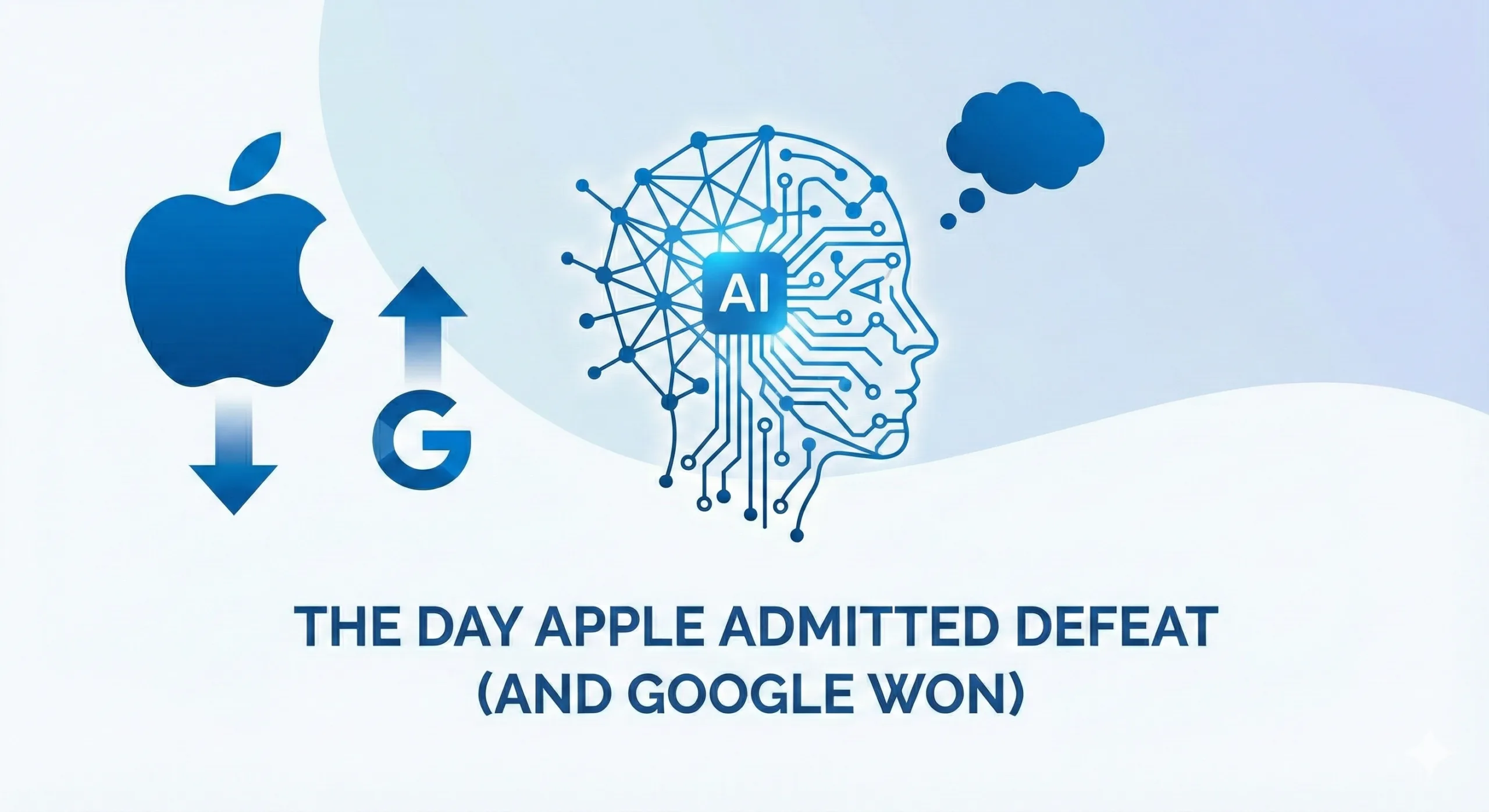
For years, the tech world has been watching the “AI arms race” between OpenAI, Microsoft, and Google, waiting to see where Apple would land. The silence from Cupertino was deafening—until now. It is officially confirmed that Apple will use Google Gemini to power Siri.
While many Apple fans are celebrating the potential for a “smarter Siri,” the real story here isn’t about the iPhone. It’s about Google. By securing this partnership, Google hasn’t just gained a client; they have effectively checkmated the competition and established themselves as the default intelligence layer for the entire planet.
The “Install Base” Domination
To understand the magnitude of this deal, you have to look at the numbers. Before this partnership, Google already controlled the default AI experience on Android. There are roughly 4 billion Android devices globally. Google has spent the last year aggressively integrating Gemini into this ecosystem, depreciating the old Google Assistant and making Gemini the proactive standard.
Now, add Apple to the equation. The iOS market includes about 2.3 billion active devices. While the rollout will likely start with high-end devices (around 500 million users initially), the long-term math is staggering. We are looking at a potential 7.3 billion devices running on Gemini architecture.
At that scale, the brand of phone you buy—Samsung, Pixel, OnePlus, or iPhone—becomes irrelevant. The core “brain” powering your device will be Google. This allows Google to define the baseline intelligence for nearly every smartphone on Earth.
Why Apple “Chose” Google (Hint: They Had To)
Apple is famous for its “wait and see” approach. They typically let others fail first, then swoop in with a polished, perfect version of the technology. But with AI, that strategy backfired spectacularly.
Apple under-researched and under-implemented AI, leaving them miles behind competitors like OpenAI, Perplexity, and DeepSeek. Shareholders were getting anxious. Building a Large Language Model (LLM) capable of powering a global assistant isn’t just about writing code; it requires massive server infrastructure, endless data, and years of trial and error.
Apple realized late in the game that they couldn’t catch up in time. They needed a “blank canvas” model that was reliable, efficient, and ready to go. Google, having spent the last decade perfecting this tech, was the only viable option. Apple chose efficiency over pride, effectively “renting” the intelligence they failed to build themselves.
The Death Blow to OpenAI?
The biggest loser in this deal isn’t Apple; it’s OpenAI. Sam Altman and his team have spent billions on chips and talent, hoping to secure a major distribution partnership. The “Holy Grail” of consumer tech was getting their model onto the iPhone natively.
By licensing Gemini, Google has denied OpenAI access to the world’s most lucrative premium consumer base. If OpenAI wants to reach these users now, they have to convince them to download a separate app. Google, meanwhile, doesn’t have to do anything. They simply exist as the default.
Beyond Phones: Smart Glasses
The implications extend far beyond the phone in your pocket. The next frontier in consumer tech is smart glasses—wearables that see and understand the world around you. This technology requires a multimodal AI that is:
-
Fast (low latency)
-
Efficient (won’t kill battery life)
-
Cheap (won’t require a massive subscription fee)
Google’s Gemini 3 Flash model is already built exactly for this. They are actively testing it with Project Mariner and Android XR. By dominating the operating system level on both Android and iOS, Google is quietly positioning itself to power the smart glasses of the future, whether they are made by Samsung, Apple, or Google itself.
Vindication for the “Boring” Strategy
For a long time, Google was criticized for being too slow, too safe, and too boring with their AI rollout while OpenAI grabbed the headlines. But this deal proves that “slow and steady” was the correct play.
Google’s massive reach and infrastructure allowed them to suffocate the competition. When Apple—a company known for its incredibly high standards and arrogance—looked at the entire market and decided that only their biggest rival, Google, was capable of handling their needs, the debate ended.
The tides have officially turned. We are no longer watching an AI race; we are living in a Google-powered world. Apple just signed the lease.