
Disclaimer: The information provided in this article is for educational and informational purposes only and is not intended as medical or mental health advice. Always consult with a qualified healthcare or mental health professional regarding any specific concerns.
We live in an era that never logs off. With endless scrolling, constant notifications, and the lingering pressure to always be accessible, it is no surprise that burnout is at an all-time high. Recent data suggests the average adult spends over six hours online daily, with a substantial portion of that dedicated to social media.
This hyper-connectivity has led to a documented rise in anxiety, poor sleep quality, and a lack of sustained focus. To combat this, wellness experts and mental health professionals are increasingly advocating for a digital detox. But what exactly does that mean in a world where our jobs and social lives depend on screens?
What is a Digital Detox?
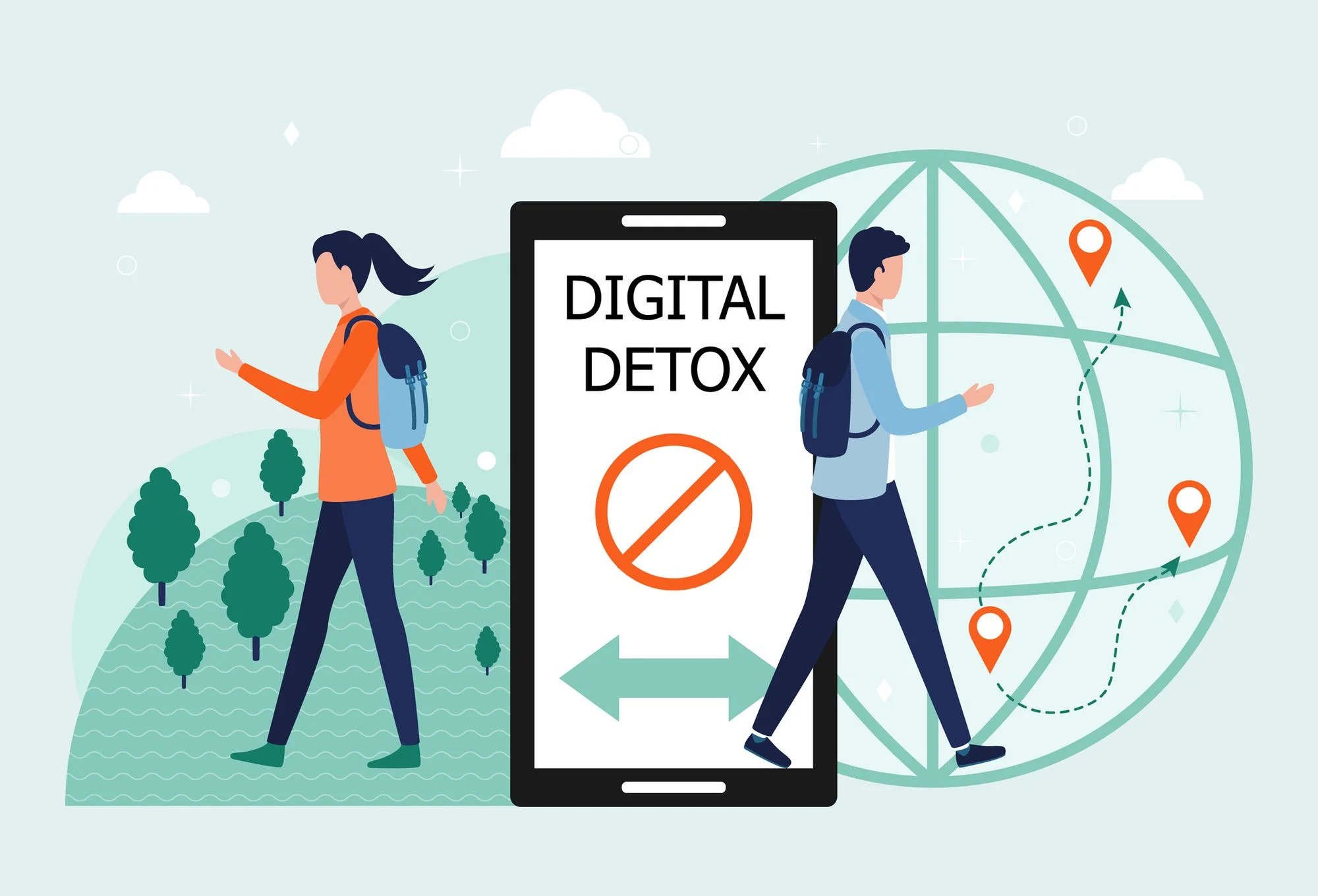
A digital detox is not an anti-technology movement, nor does it require you to completely abandon your devices and live in the woods. Instead, it is the practice of being intentionally mindful about your screen time and taking deliberate breaks from digital devices.
The goal is to shift your mindset from being constantly reachable to being deeply present in your offline life. By stepping away from the endless stream of online information, you allow your brain to reset and recover from chronic overstimulation.
The Rise of “Micro-Detoxing”
For many people—especially those whose careers require an online presence—quitting cold turkey is not feasible. This has given rise to a more manageable trend: micro-detoxing.
Micro-detoxing involves setting small, achievable boundaries to disconnect in bite-sized increments. For example:
-
Logging off completely every Sunday.
-
Implementing a strict “no screens after 8:00 PM” rule.
-
Leaving your phone in another room during family dinners.
Research supports this approach. According to the American Psychological Association (APA), even taking a 24-hour break from social media can lead to noticeable improvements in mood, productivity, and interpersonal connections for the week ahead.
Actionable Strategies to Balance Your Tech Use
If you are ready to reclaim your time and improve your mental health, you need a proactive strategy. Relying purely on willpower is rarely enough when competing against apps engineered to capture your attention.
1. Structure Your Time

Structure always beats willpower. Use time-management techniques like the Pomodoro method, where you work in focused, 90-minute blocks without digital interruptions, followed by a scheduled break.
2. Leverage Tech to Fight Tech
Ironically, you can use technology to enforce your digital detox.
-
Focus Modes: Utilize your phone’s built-in Focus or Do Not Disturb settings during work hours or family time.
-
Grayscale Mode: Switch your phone’s display to grayscale. Stripping away the vibrant colors makes the screen far less stimulating and addictive.
-
App Limiters: Install applications designed to lock you out of specific social media platforms after you reach a daily time limit.
3. Make It a Team Sport
Detoxing is easier when you aren’t doing it alone. Partner up with a spouse, friend, or colleague to create tech-free zones. Going for a hike without phones or enforcing a “no devices at the dinner table” policy creates shared accountability and fosters deeper, more meaningful human conversations.
The Bottom Line
Technology is not inherently bad; the issue lies in how we consume it. A successful digital detox is about deliberate consumption. Before you unlock your phone, ask yourself why you are logging on. Are you intentionally seeking specific information, or are you mindlessly seeking a dopamine hit?
By embracing micro-detoxing and setting intentional boundaries, you can navigate our digital world without sacrificing your mental health, focus, or connection to the physical world. For more extensive guidance on managing screen time, resources from Mental Health America provide excellent starting points for a healthier digital life.